Why You're Gaining Belly Fat in Perimenopause (And Why Cutting Calories Isn't the Fix)
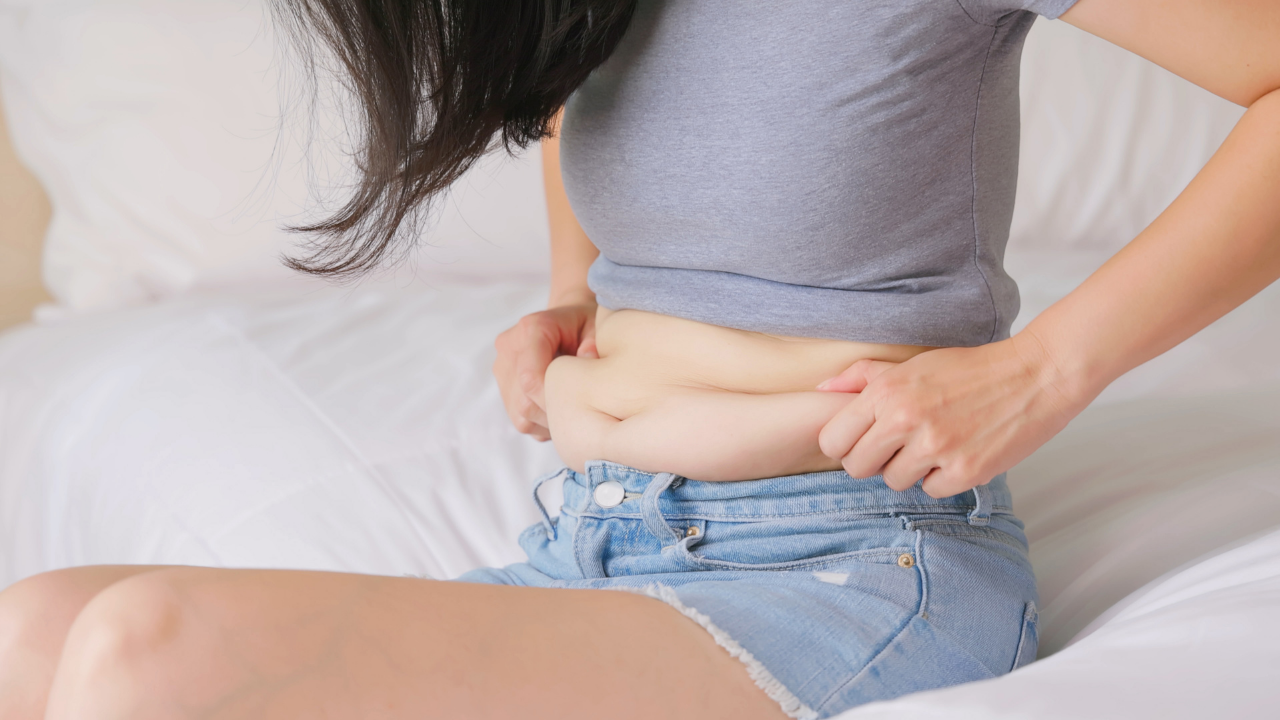
Jul 20, 2026Have you looked in the mirror lately and wondered, "Where did this belly come from?"
Maybe your jeans still fit through your legs, but suddenly the waistband feels like it's trying to cut off your circulation. Your favorite bra now has a mysterious little "back roll" that wasn't invited. You swear someone snuck into your closet overnight and shrunk all your clothes. Meanwhile, your husband eats chips on the couch, loses five pounds, and has the audacity to ask, "Have you tried eating less?" (Bless his heart.)
Belly fat seems to show up like an unwanted houseguest. No invitation. No warning. And apparently no plans to leave. If this sounds familiar, let me reassure you of something right away: you're not imagining it, and you're definitely not losing your willpower.
As a registered dietitian, I spent years teaching women how to lose weight. Then I went through surgical menopause myself after a hysterectomy, and suddenly all the things that had always worked...didn't.
That experience sent me back to the research, and what I found changed the way I approach nutrition for women in perimenopause and menopause.
The truth is, your body isn't broken.
It's adapting to a completely different hormonal environment.
And once you understand what's happening, everything starts to make a lot more sense.
Estrogen has been helping manage where your body stores fat—and that's changing
During your reproductive years, estrogen plays a major role in where your body prefers to store fat. It encourages more fat to be stored around the hips, thighs, and glutes rather than deep inside the abdomen.
Think of it as your body's preferred storage location.
As estrogen begins to fluctuate and decline during perimenopause, those instructions gradually change. More fat starts accumulating around the waist. Some of it is the pinchable fat just under the skin, but there's also an increase in visceral fat—the deeper fat that surrounds your organs.
Unlike subcutaneous fat, visceral fat is metabolically active. Higher amounts are associated with increased risk for insulin resistance, type 2 diabetes, cardiovascular disease, and metabolic syndrome.
In other words, this isn't simply about your jeans fitting differently. It's one reason we pay closer attention to metabolic health during and after menopause.
It's not just where fat is stored—it's how your body functions
Here's where things get even more interesting.
Several changes happen at the same time, almost like the perfect hormonal storm.
You naturally lose muscle
Estrogen helps support muscle maintenance throughout adulthood. As estrogen declines, age-related muscle loss speeds up unless we actively work to preserve it.
Why does this matter?
Because muscle is metabolically active tissue. The more muscle you have, the more energy your body uses throughout the day—even while you're sitting on the couch watching Netflix.
Less muscle means your calorie needs gradually decrease.
This is why so many women tell me, "I'm eating exactly the way I always have."
Honestly? I believe them. The body changed—not necessarily the menu.
Your insulin sensitivity changes
Estrogen also helps your cells respond to insulin.
As hormone levels shift, many women become less insulin sensitive, meaning the body needs more insulin to keep blood sugar under control. Over time, higher insulin levels make it easier to store fat—especially around the abdomen. At the same time, increasing visceral fat can make insulin resistance even worse.
It's a frustrating cycle, but it's also one we can influence with nutrition, movement, and muscle-building.
Your appetite isn't always playing fair
Have you ever finished dinner and somehow still felt like you could eat the entire pantry? You're not alone.
Estrogen interacts with the hormones that regulate hunger and fullness. During perimenopause, many women notice increased cravings, feeling less satisfied after meals, or wanting to snack more often. Now add one more common menopause symptom: poor sleep.
If you're waking up at 2:47 every morning for absolutely no reason (because apparently menopause likes oddly specific times), sleep disruption can increase hunger hormones while making it harder for your brain to recognize fullness.
Suddenly, those afternoon cravings make a whole lot more sense.
Why "eat less and move more" often backfires
This is the advice so many women receive.
Eat less. Exercise more. Repeat.
The problem? That advice was never designed for a body experiencing declining estrogen, changing muscle mass, disrupted sleep, and shifting insulin sensitivity. When calories are cut too aggressively, your body doesn't just lose fat—it can also lose muscle. And losing muscle is exactly what we don't want during menopause because muscle is one of your greatest allies for maintaining a healthy metabolism.
It's no wonder so many women tell me, "I've tried everything."
Cutting carbs.
Skipping meals.
Intermittent fasting.
Drinking another green smoothie.
Tracking every calorie.
Yet the belly fat seems to unpack its suitcase and settle in anyway.
The goal isn't to eat as little as possible.
The goal is to support the metabolism you have today.
My approach: Eat. Move. Go.
I like to keep things simple because menopause is complicated enough.
EAT
Instead of asking, "How can I eat less?" Ask, "How can I nourish my body better?"
- Start with protein at every meal.
- Fill your plate with colorful vegetables.
- Include healthy fats.
- Don't fear high-fiber carbohydrates like berries, beans, oats, and sweet potatoes.
- Protein helps preserve muscle.
- Fiber supports blood sugar, gut health, and fullness.
This isn't about restriction. It's about giving your body what it needs now.
MOVE
Cardio is wonderful for your heart. But strength training is your metabolic insurance policy. Building and maintaining muscle helps improve insulin sensitivity, supports bone health, and keeps your metabolism stronger as you age.
No, you don't have to become a bodybuilder.
Lifting weights two to four times each week can make an incredible difference. And while carrying every grocery bag into the house in one trip deserves a medal...it doesn't count as your resistance workout. Sorry.
GO
This is the step many women overlook. Healthy digestion and regular bowel movements aren't just about comfort. Your gut plays an important role in inflammation, hormone metabolism, and overall health.
When digestion slows down—as it often does during midlife—you may notice more bloating, constipation, and discomfort. Supporting your gut with fiber, hydration, movement, and a variety of plant foods can make a meaningful difference. We'll dive much deeper into the gut-hormone connection in my next article.
Here's what I want you to remember
If your body suddenly feels unfamiliar...
If your waistline seems to have a mind of its own...
If you're doing everything "right" and wondering why nothing is working...
Please know this:
You're not lazy.
You're not failing.
You're not doing menopause wrong.
Your hormones changed.
Your strategy needs to change, too.
The goal isn't to get your 30-year-old body back.
The goal is to build the healthiest, strongest version of the body you have today.
And that is absolutely possible.
I've lived this journey myself after surgical menopause, and I've helped many women navigate it successfully. Once you understand why your body is changing, you can stop blaming yourself—and finally start working with your body instead of fighting against it.
If you're ready for a step-by-step plan that takes the guesswork out of what to eat, how to move, and how to support your changing metabolism, that's exactly why I created The Reset Routine. Because you deserve a strategy that's designed for the body you have now—not the one you had twenty years ago.
Get started today. Join the Belly Fat Reset.
a free mini course that shows you the exact protein, fiber, and movement targets to address menopausal belly fat, not just another diet.
We hate SPAM. We will never sell your information, for any reason.